
Bizum and Wero: How Europe’s Unified Payment Network Will Change International Transfers in 2026
Europe is moving towards a connected payment network that could make sending money between countries almost as straightforward as making a local mobile payment. In 2026, Spain’s Bizum and the European payment service Wero joined forces with several established national services to develop a shared system for international transfers. The initiative has already progressed beyond initial agreements, with a new organisation created to coordinate its implementation. For consumers, the main attraction is the possibility of transferring euros directly between participating bank accounts without switching applications or manually entering lengthy banking details. For businesses, the project could eventually simplify accepting payments from customers across Europe. However, the connection is being introduced in stages, and full compatibility between Bizum and Wero is not yet available to every user.
How Bizum and Wero Are Building a Connected European Payment Network
Bizum is one of Spain’s most established mobile payment services, allowing customers of participating banks to send money using a recipient’s telephone number. It is integrated into banking applications and is widely used for everyday transfers, splitting restaurant bills and paying small businesses. Wero follows a similar approach but was developed by the European Payments Initiative (EPI), a company backed by European banks and payment service providers. Launched in 2024, Wero initially focused on transfers between individuals in Germany, France and Belgium. Its subsequent expansion into online shopping and additional countries reflects a broader ambition to create a common European payment experience. Both services use direct bank account payments rather than requiring customers to fund a separate balance before transferring money.
The decisive agreement was announced on 2 February 2026, when Bizum, EPI, Italy’s Bancomat, Portugal’s SIBS–MB WAY and Nordic service Vipps MobilePay signed a memorandum of understanding. The organisations agreed to connect their existing payment services through shared infrastructure, rather than replace familiar national applications with a single product. This distinction matters because customers have already developed confidence in their banking applications, while participating institutions have invested heavily in their domestic payment arrangements. The agreement proposed international person-to-person transfers during 2026, followed by wider online and physical retail payment capabilities in 2027. It also established a practical route towards connecting payment services that previously operated mainly within national markets.
On 30 September 2026, the participating organisations announced the creation of the European Network for Payments (ENP), headquartered in Madrid. Its five founding partners hold equal ownership stakes and have agreed to coordinate the development of a common connection between their services. According to the announcement, their combined payment solutions already serve approximately 130 million users across 13 European countries, covering more than 70% of the combined population of the European Union and Norway. These figures describe the reach of the existing services, not the number of people who can already transfer money between every participating country. The new organisation is preparing the technical implementation, with international transfers between individuals taking priority before the introduction of broader merchant payments.
Why Europe Is Connecting Existing Services Instead of Replacing Them
Europe already has several successful national payment services, but their geographical boundaries create inconvenience. A Spanish customer may routinely use Bizum to reimburse friends, while someone in Germany uses Wero and a Portuguese resident relies on MB WAY. Although these services perform similar functions, this does not automatically allow their customers to exchange payments. A Spanish student living in France, for example, may find that a familiar telephone-number transfer cannot reach a French friend using a different service. The planned connection addresses this fragmentation by allowing participating payment providers to recognise and exchange transactions while preserving the applications and banking relationships customers already use.
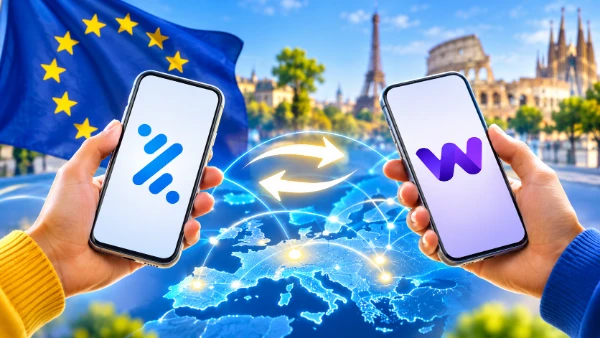
The proposed arrangement is based on an interoperability hub, which acts as a connection point between separate payment services. In practical terms, a payment initiated through Bizum could eventually be directed to a Wero recipient, provided both banks support the relevant international functionality. The recipient would not necessarily need to register with Bizum, just as the sender would not have to abandon their Spanish banking application. European instant account-to-account payments provide the underlying mechanism, while the shared network coordinates communication between the participating services. The intention is to make international payments feel familiar, although their exact appearance, recipient identification requirements and availability will depend on implementation by individual banks.
This approach also reflects European efforts to reduce reliance on payment arrangements controlled outside the region. International card networks remain important for travel, shopping and online commerce, but they are not the only practical way to move money between European accounts. By connecting domestic payment services, European financial institutions can support another method for everyday transactions. The project is commercially significant because it builds on services with existing customers rather than requiring millions of people to adopt an unfamiliar application simultaneously. Nevertheless, European ownership alone does not guarantee lower fees, universal acceptance or better consumer protection. Those outcomes will depend on banking agreements, operational reliability and the conditions offered to customers and businesses.
What the Bizum and Wero Agreement Means for International Money Transfers
The most immediate potential benefit is greater convenience when transferring money between individuals in different European countries. Conventional cross-border bank transfers often require the sender to obtain the recipient’s IBAN and confirm several payment details. With a compatible mobile payment service, identifying someone through a registered telephone number could make the process considerably simpler. Imagine a Spanish resident paying a friend in Belgium for shared accommodation or reimbursing a German colleague after a business trip. Once the relevant banks have activated interoperability, these transactions could be initiated through the sender’s familiar payment service. The objective is to combine the accessibility of domestic mobile payments with the international reach normally associated with bank transfers.
Speed is another important consideration. The European network is being developed around instant account-to-account payments, which can transfer funds within seconds when the participating institutions and transaction meet the necessary requirements. This is especially useful for urgent reimbursements, shared household expenses and payments between relatives living in different countries. However, the existence of instant payment infrastructure does not mean every Bizum-to-Wero transaction is already possible. A bank must support the relevant international service, the recipient must be eligible and the payment must satisfy applicable security checks. Even after wider implementation, individual transfers may encounter restrictions, technical interruptions or additional verification procedures. Customers should therefore distinguish between the speed of the underlying payment system and the actual availability of a particular international transfer.
Costs may also change, although the new agreement does not establish a universal free-transfer policy. Many customers already enjoy convenient domestic mobile payments, and European instant euro transfers are subject to important pricing protections. Under the EU Instant Payments Regulation, payment service providers covered by the relevant provisions cannot charge more for an instant euro credit transfer than for a corresponding standard euro credit transfer. This does not automatically determine the complete pricing of every additional mobile payment service or remove possible costs associated with currency conversion. A transfer between euro accounts in Spain and France is also different from one involving a Norwegian account denominated in kroner. Users should check their bank’s published conditions rather than assume all international payments will be free.
Availability, Security and Transfer Limits in 2026
As of November 2026, consumers should not assume that every Bizum account can send money directly to every Wero user. The February agreement established the intended timetable, while the September announcement confirmed the creation of the organisation responsible for connecting the services. The autumn 2026 roadmap identifies international person-to-person interoperability as an initial objective, but the announcements do not establish universal live access across all participating banks. Bizum has already gained some international functionality through cooperation within the EuroPA alliance, particularly involving Spain, Portugal and Italy. This existing progress should not be confused with full Bizum–Wero compatibility. Anyone planning a transfer should check the international payment options currently displayed by their bank and confirm whether the recipient’s country and service are supported.
Security remains essential because rapid transfers can also make payment mistakes harder to reverse. Users should initiate payments only through their official banking application or the recognised service, carefully check recipient details and treat unexpected payment requests with caution. European payment providers are subject to rules concerning customer authentication, fraud prevention and the protection of financial information. The EU has also introduced requirements for verifying whether a payee’s name matches the account information supplied for euro credit transfers, helping reduce certain errors and fraudulent redirections. These protections are valuable, but they cannot eliminate scams in which someone is persuaded to authorise a payment voluntarily. A fraudulent message claiming that an international transfer requires a special activation fee should be treated as suspicious.
Transaction limits are another practical detail that may differ between countries and institutions. Bizum operates through participating Spanish banks, which may apply their own conditions alongside the service’s general limits. Wero availability and transfer restrictions can likewise depend on the bank, national market and payment method. The creation of ENP does not mean all participating services will immediately adopt identical maximum amounts or eligibility criteria. Consumers sending larger sums should establish whether their bank supports the transaction and whether an alternative SEPA transfer would be more suitable. It is also important to verify that the recipient can receive the money before confirming a payment, particularly when using a newly introduced international feature. Checking these details beforehand can prevent unnecessary delays and uncertainty.
How the European Payment Network Could Change Shopping and Business Payments
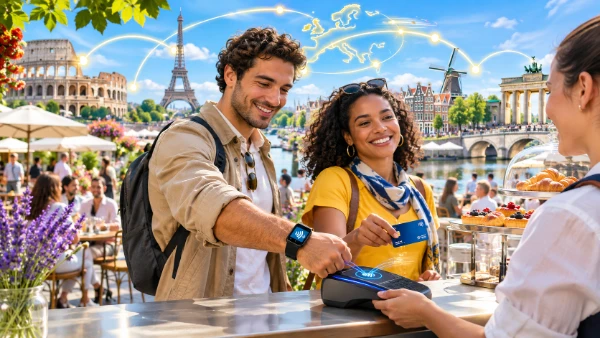
Although personal transfers are the first priority, the longer-term implications extend to shops, online retailers and service providers. The participating organisations intend to introduce broader e-commerce and point-of-sale interoperability during 2027. A Spanish customer could eventually pay a participating German online retailer through Bizum, while a Wero user visiting Spain might be able to complete a purchase without relying on a conventional international card transaction. Such payments would use familiar banking services connected through the European network. For merchants, this could create another way to accept money from international customers. However, acceptance will depend on the availability of compatible payment arrangements, commercial agreements and integration with retailers’ existing checkout systems.
Businesses may benefit from faster access to funds and a wider choice of payment methods. Direct account-to-account payments can reduce the number of intermediaries involved in processing transactions, potentially affecting operating costs and settlement arrangements. These advantages will not necessarily translate into identical savings for every merchant, because providers may still charge for payment acceptance, transaction processing and additional services. Retailers must also consider refunds, accounting procedures and customer support. Unlike a traditional card purchase, an instant bank transfer does not automatically include the same chargeback arrangements. Businesses accepting international payments will need clear procedures for correcting mistakes, resolving disputed purchases and returning money when necessary.
For the wider European economy, the network could make it easier for smaller businesses to serve customers beyond their domestic market. A Portuguese retailer using MB WAY or an Italian business accepting Bancomat payments may eventually reach additional customers through compatible European payment services. The expansion could also create more competition among banks, payment processors and international card providers. Nevertheless, the benefits will develop gradually rather than appearing across Europe on a single launch date. The European Network for Payments must coordinate multiple national services, each with its own banking relationships, customer expectations and technical requirements. Successful implementation will depend as much on consistent customer experiences and reliable merchant acceptance as on the underlying instant payment infrastructure.
What Consumers and Businesses Should Expect During 2027
The published roadmap identifies 2027 as the next important stage, with international online shopping and payments at physical points of sale expected to follow the initial person-to-person rollout. The participating services will retain their existing names, while a shared acceptance indicator is planned to help consumers recognise where international payments are supported. This means customers should not need to replace Bizum or Wero simply because the two services become connected. For everyday users, the most visible changes may appear directly within their banking applications, including new supported destinations or payment options. Nevertheless, the roadmap is a development target rather than a guarantee that every participating country, bank and retailer will offer identical functionality from the beginning of 2027.
Consumers should also distinguish this commercial initiative from the digital euro project being developed by European public institutions. Bizum and Wero are existing payment services that rely on commercial bank accounts and established financial arrangements. The proposed digital euro, by contrast, concerns a potential form of central bank money. Both developments relate to the future of European payments, but they have different organisations, objectives and implementation processes. Neither should be presented as a replacement for ordinary bank transfers, cash or existing cards in 2026. In practice, additional payment choices may be more useful than requiring everyone to adopt one method. Customers will continue to choose services according to convenience, availability, price and the protections offered for each transaction.
The creation of the European Network for Payments marks a significant change in how European payment providers intend to cooperate. Instead of building another isolated national service, Bizum, Wero and their partners are working towards a connection between payment methods already used by millions of people. The practical benefits could include simpler international reimbursements, faster access to transferred funds and more convenient cross-border shopping. Yet the distinction between an announced agreement and an operational service remains important. As of November 2026, the network is still progressing through its implementation stages, and customers should verify actual support with their banks before attempting international payments. Its success will ultimately be measured by whether ordinary users can send and receive money across borders as easily and reliably as they do at home.
-
Bizum and Wero: How Europe’s Unified Payment Netw...
Europe is moving towards a connected payment network that could …
-
 Gaming Corps in 2026: From Crash Games to Global Deals ...
Gaming Corps entered 2026 as a Swedish game developer already …
-
 Reel Kingdom Provider Review
Reel Kingdom, a notable name in the online gaming industry, …