
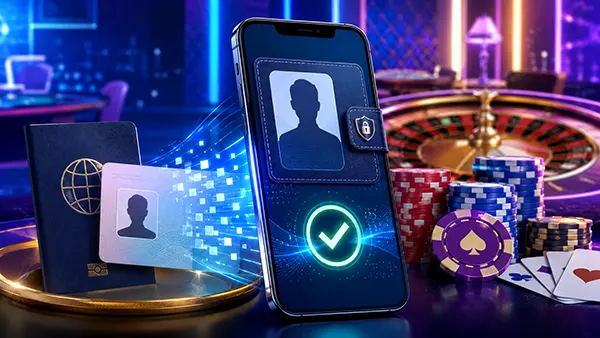
EU Digital Identity Wallet in Online Casinos: Will It Replace Passport Checks?
The EU Digital Identity Wallet is expected to change how European online casinos confirm a player’s identity, age and personal details. As of July 2026, however, it would be misleading to claim that passports are about to become unnecessary. The wallet can remove the need to upload a photograph or scan of a passport during many routine account checks, provided that the casino accepts the digital credential and national gambling rules permit its use. It does not remove the operator’s duty to know its customers, assess financial crime risks or investigate unusual activity. The most realistic outcome is therefore a change in the method of verification: instead of sending a document image to every casino separately, a player may present trusted identity data from a state-recognised digital wallet. Passport requests will become less common in straightforward cases, while additional documents will remain necessary when information is incomplete, inconsistent or connected with a higher-risk transaction.
How the EU Digital Identity Wallet Changes Casino Verification
The European Digital Identity Wallet was established through the revised eIDAS rules under Regulation (EU) 2024/1183. EU Member States are required to provide at least one recognised wallet to citizens and eligible residents by the end of 2026. A wallet may be issued directly by a government body, supplied by an organisation acting under a state mandate or offered independently and then formally recognised by the relevant Member State. Although national versions may look different, they must follow common European requirements so that identity information can be checked across borders. Use of the wallet is voluntary for individuals. A player should not be forced to install one simply to access a service when another legally acceptable identification method is available.
The wallet is intended to hold verified person identification data and electronic attestations of attributes. In practical terms, these can confirm details such as a person’s name, date of birth or another fact issued by an authorised source. The user remains in control of each disclosure and must approve the information being shared. This creates an important difference from conventional document uploads. A passport scan exposes the photograph, document number, nationality, date of birth, expiry date and other information at once. A wallet can support selective disclosure, allowing the casino to request only the data justified for a particular check. For an age-restricted service, the relevant result may eventually be confirmation that the customer is over 18 rather than a full copy of the customer’s identity document.
Traditional casino verification often requires the player to photograph a passport, identity card or driving licence and then submit a selfie or complete a live facial check. The operator or its verification provider reads the document, tests its security features and compares the photograph with the person opening the account. With a compatible EU wallet, the player could instead authorise the transfer of verified identity data from a trusted issuer. The casino would validate the digital credential rather than inspecting a photograph of the original document. The passport may still have been used when the wallet holder’s legal identity was first established, but it would not need to be copied and stored by every casino the person joins.
What a Wallet-Based Casino Registration Could Look Like
A typical registration could begin with the player entering basic account information and choosing an option such as verification with an EU Digital Identity Wallet. The casino would send a request stating which details it needs and why they are required. The wallet would show the requested information before anything was released. After the player approved the request, the casino would receive cryptographically verifiable data from the relevant issuer. The operator could then compare those details with the registration record, check eligibility under its licence conditions and run required screening. For a standard low-risk applicant whose information matches, this process could reduce a verification procedure lasting several hours or days to a short exchange completed during registration.
Age confirmation is one of the clearest uses for this approach. The European Commission has also developed an age-verification blueprint that can operate as a separate application or be incorporated into an EU wallet. Its purpose is to let a user prove that a required age threshold has been reached without revealing an exact birth date or full identity. In an online casino, this could reduce unnecessary collection of personal data during an initial age check. It would not always be sufficient for a real-money account, because gambling operators commonly need the customer’s legal identity as well as proof of adulthood. It could still be useful for separating a simple age gate from the more extensive checks required before deposits, betting or withdrawals are allowed.
The experience will not be identical at every casino from the first day of rollout. The operator must build a compatible connection, register correctly as a relying party and explain the purpose of each data request. Its gambling licence, local legislation and anti-money laundering obligations must also recognise the submitted credential as an acceptable verification source. Some large operators are likely to adopt wallet verification earlier because they process substantial numbers of European accounts and can justify the integration cost. Smaller businesses may retain document uploads for longer. Customers from the United Kingdom, Switzerland and other European countries outside the EU system should not assume that their national identity tools will automatically work with an EU wallet or that EU acceptance rules apply to locally licensed casinos.
Why Passport and Document Requests Will Still Exist
Digital identity does not cancel customer due diligence. Under the anti-money laundering rules applying in 2026, gambling businesses must identify customers, verify their identities in required circumstances, monitor relevant activity and respond when information appears false or insufficient. EU rules specifically address customer due diligence connected with gambling transactions of €2,000 or more, whether the amount is reached through one transaction or linked transactions. Member States and national regulators may impose earlier or stricter verification, particularly for remote gambling accounts. A casino may therefore verify an account before the player reaches that figure. The new EU Anti-Money Laundering Regulation will create more directly harmonised requirements from 10 July 2027, but it will continue the central principle that identity verification is part of a wider risk-based process.
An EU wallet can answer the question “Who is this customer?” more efficiently, but it cannot answer every compliance question. The casino may still need to establish the customer’s country of residence, confirm that a payment method belongs to the account holder, screen the person against sanctions lists and determine whether enhanced checks apply to a politically exposed person. It must also monitor deposits, bets, transfers and withdrawals for patterns that do not fit the customer’s known circumstances. A verified name and date of birth do not prove where gambling funds came from or whether a large transaction is economically reasonable. Source-of-funds evidence may therefore include bank statements, payslips, tax documents, business records, property-sale documents or evidence of an inheritance.
Documents will also remain necessary when digital information cannot be validated cleanly. Examples include differences between a legal name and the name entered on the casino account, a recent address change, an expired or revoked credential, a compromised wallet, suspected identity theft or repeated attempts to open accounts under related details. A customer who has no compatible wallet must be offered another identification route where the law requires access to an alternative. Manual checks may also be needed after account recovery, a change of mobile device or loss of wallet access. Non-EU customers are especially likely to continue using passports and national identity cards because the European wallet is designed primarily for EU citizens and residents covered by national rules.
Situations in Which a Casino May Request More Evidence
A further request is most likely when the account presents a higher financial crime or fraud risk. A sudden large deposit from a previously unused bank account, payments from another person, rapid movement of funds with little gambling activity or withdrawal instructions that do not match the original deposit route can trigger review. The same applies when the casino receives information suggesting that the customer’s income, occupation or place of residence does not fit the observed activity. In these circumstances, the wallet remains useful for confirming identity, but it does not resolve the underlying concern. The operator may pause a payment while it asks for evidence connected with the particular transaction and assesses whether a report to the relevant authority is required.
National gambling law remains a decisive factor because the EU digital identity rules do not create one gambling licence or one registration procedure for the whole Union. Each regulated market can set its own minimum gambling age, account-opening controls, self-exclusion checks, residence restrictions and timing for identity verification. One regulator may allow a recognised digital credential to satisfy the standard identity requirement, while another may require additional information before the account can be activated. Operators holding several national licences will need to configure the same wallet connection differently for each market. Players should therefore avoid treating successful verification at one EU-licensed casino as proof that every other operator must accept exactly the same data.
At the same time, casinos should not use compliance as a reason to collect unlimited personal information. EU data-protection principles require information to be relevant and limited to what is necessary for a stated purpose. The wallet’s selective-disclosure design supports that approach by showing both the requested attributes and the identity of the organisation asking for them. A properly designed process should reduce repeated passport uploads and prevent an operator from requesting a complete document when a verified attribute would satisfy the same legal need. Extra evidence can still be justified, but the request should relate to a genuine regulatory, security or payment concern rather than a routine demand made to every customer without distinction.

What Players and Casino Operators Should Expect After 2026
The end of 2026 is a delivery target for Member States, not a date on which all passport uploads will suddenly stop. Wallet availability, public adoption and commercial integration will develop at different speeds. Certain private services that are legally required to use strong online identification must accept EU wallets within the timetable set by the revised eIDAS rules, but the exact position of a gambling operator can depend on national law and the type of identification it is required to perform. Broader acceptance obligations also extend beyond the initial wallet rollout. During the first stage, players are likely to see a mixed market in which some casinos offer wallet verification, others rely on existing national electronic identification systems and many continue to accept conventional documents.
For players, the principal benefit is not complete anonymity but greater control over verified data. A wallet can reduce the number of businesses holding passport images, shorten repetitive registration checks and create a clearer record of what information was requested. It may also help a person verify an account with an operator licensed in another EU state without using a separate local electronic identification method. These benefits do not create a right to gamble or guarantee account approval. The casino can still refuse an application where its licence prohibits customers from a particular country, where self-exclusion records apply, where sanctions prevent the relationship or where the operator cannot complete required risk checks.
For casinos, wallet verification could lower the number of unclear photographs, expired documents, manual data-entry errors and support messages concerning rejected uploads. Verified credentials may also be harder to alter than ordinary image files. The operational gains will be balanced by new responsibilities. Operators must connect to recognised issuers, validate credentials correctly, protect the information they receive and retain suitable evidence that checks were completed. They will need fallback procedures for players without wallets and controls for stolen devices, revoked credentials and account takeover. A poor integration could simply add another verification route without reducing manual work, so early adoption alone will not guarantee a better customer experience.
The Likely Outcome: Replacing the Passport Scan, Not KYC
The clearest answer is that the EU Digital Identity Wallet can replace a passport scan in many standard casino checks, but it cannot replace KYC itself. Identification is only one part of KYC. The casino must still decide whether the customer is legally eligible, whether the account information is consistent, whether payments belong to the same person and whether activity creates an unacceptable risk. For a straightforward adult EU resident using a personal payment method and making ordinary transactions, wallet-based verification may be enough to avoid sending a passport image. For a complex, high-value or suspicious case, the operator will still require information outside the wallet.
Between 2026 and 2028, a hybrid model is the most credible scenario. A growing number of customers will use recognised digital credentials for initial identity and age checks, while document upload will remain available as a backup. Operators may ask wallet users for address evidence if the required address attribute is unavailable or outdated. They may request bank or employment records when reviewing the origin of funds. Passports will also remain important for visitors, non-EU residents and customers whose national wallet has not yet been connected to the casino. Over time, more verified attributes may be issued digitally, reducing reliance on separate files, but that development depends on national issuers, regulators and operator adoption.
Players using the new method should read the wallet request before approving it, check which organisation is asking for the data and share only the attributes needed for the stated purpose. They should also keep their wallet device secure and report loss or suspected misuse promptly. Casino operators should explain which checks the wallet completes, which circumstances can lead to additional evidence and how long received data is retained. When those safeguards are applied properly, the EU Digital Identity Wallet can make casino verification faster and less intrusive. Its role is not to remove identity checks, but to replace repeated document copying with a more controlled and verifiable exchange of information.
-
 Gaming Corps in 2026: From Crash Games to Global Deals ...
Gaming Corps entered 2026 as a Swedish game developer already …
-
 Reel Kingdom Provider Review
Reel Kingdom, a notable name in the online gaming industry, …
-
 The best providers in the gaming industry
Few gambling enthusiasts consider why the experience can vary from …